- English
- Español
- Português
- русский
- Français
- 日本語
- Deutsch
- tiếng Việt
- Italiano
- Nederlands
- ภาษาไทย
- Polski
- 한국어
- Svenska
- magyar
- Malay
- বাংলা ভাষার
- Dansk
- Suomi
- हिन्दी
- Pilipino
- Türkçe
- Gaeilge
- العربية
- Indonesia
- Norsk
- تمل
- český
- ελληνικά
- український
- Javanese
- فارسی
- தமிழ்
- తెలుగు
- नेपाली
- Burmese
- български
- ລາວ
- Latine
- Қазақша
- Euskal
- Azərbaycan
- Slovenský jazyk
- Македонски
- Lietuvos
- Eesti Keel
- Română
- Slovenski
- मराठी
- Srpski језик

lost wax casting process
What is the Lost Wax Casting Process?
The lost wax casting process, also known as investment casting, is a time-honored manufacturing technique for producing complex, high-precision metal parts. This method is prized for its ability to create components with excellent surface finishes, intricate details, and tight dimensional tolerances. The fundamental principle involves creating a precise wax pattern of the desired part, which is then encased in a refractory ceramic material to form a mold. The wax is subsequently melted and "lost" from the mold, leaving behind a hollow cavity. Molten metal is then poured into this cavity, filling the exact shape of the original wax pattern. After the metal solidifies, the ceramic shell is broken away to reveal the final metal casting. This process is often contrasted with high-pressure metal die casting equipment, which forces molten metal into a steel die under pressure. While die casting is excellent for high-volume production, the lost wax casting process excels in producing low to medium volumes of highly detailed parts, often where the geometric complexity exceeds the capabilities of a standard metal die casting process. It is a cornerstone technology in industries such as aerospace, jewelry, medical implants, and art sculpture.
Key Stages of the <产品名字> Lost Wax Casting Process
The <产品名字> system follows a meticulously controlled series of steps to ensure unparalleled quality and repeatability. The core stages are outlined below:
- Pattern Creation: A master pattern, typically from wax or a 3D-printed resin, is produced. For high-volume runs, a metal injection mold is created to produce multiple identical wax patterns.
- Assembly (Tree Building): Individual wax patterns are attached to a central wax sprue, forming a larger assembly called a "tree," which allows for the casting of multiple parts simultaneously.
- Shell Building (Investment): The wax tree is repeatedly dipped into a ceramic slurry and coated with fine refractory sand. This builds up a multi-layered ceramic shell around the wax.
- Dewaxing: The ceramic-coated tree is placed in a high-temperature autoclave or furnace, where the wax is melted and drained out, leaving a precise ceramic mold cavity.
- Mold Firing: The empty ceramic shell is fired at an extremely high temperature to harden it and remove any residual wax, preparing it to receive molten metal.
- Melting & Pouring: Metal is melted in a furnace and poured into the pre-heated ceramic mold, filling all the intricate cavities created by the wax patterns.
- Cooling & Shell Removal: After the metal solidifies and cools, the ceramic shell is broken away via vibration or water jetting.
- Cutting & Finishing: Individual castings are cut from the central sprue and undergo various finishing operations such as grinding, sandblasting, and polishing to meet final specifications.
Technical Specifications of the <产品名字> System
The <产品名字> process is defined by precise parameters that guarantee part integrity and dimensional accuracy.
| Parameter | Specification Range | Impact on Final Product |
|---|---|---|
| Standard Tolerance | ± 0.005 in. per inch (± 0.127 mm per 25.4 mm) | Ensures parts meet precise dimensional requirements without extensive secondary machining. |
| Surface Finish (as-cast) | 63 - 125 µin Ra (1.6 - 3.2 µm Ra) | Produces smooth surfaces that reduce post-casting finishing time and cost. |
| Minimum Section Thickness | 0.020 in. (0.5 mm) | Allows for the creation of extremely fine details and lightweight, complex structures. |
| Castable Metals & Alloys | Stainless Steels, Aluminum, Titanium, Cobalt Chrome, Bronze, Gold, Silver | Provides material flexibility for diverse applications from engineering to decorative arts. |
| Typical Part Size Range | 0.1 oz to 35 lbs (3 grams to 16 kg) | Capable of producing a wide spectrum of part sizes for various industries. |
| Lead Time (Prototype to Production) | 3 - 8 weeks | Balances speed for development with the precision required for final production parts. |
Related Products




Hot Products

Titanium CNC Machining
OEM Youlin® Titanium CNC Machining Made in China. We are a team of skilled professionals, who have a huge experience in providing quality Titanium CNC Machining services. With its excellent strength-to-weight ratio and resistance to corrosion, Titanium CNC Machining parts is one of the most useful and popular products for industrial engineers, architects, and consumer product designers.
Plastic CNC Machining
We have been providing Youlin® Plastic CNC Machining and fabricating plastic components for global customers with competitive prices for many years. Our CNC equipment can carry out services, including Milling, Turning, Drilling, Grinding. We are capable of creating high-performance plastics of various materials in sheets, round rods, and more.
Automobile and Motorcycle Connecting Support Block Parts
As the professional automobile and motorcycle connecting support block parts manufacture, we would like to provide you automobile and motorcycle connecting support block parts. And we will offer you the best after-sale service and timely delivery. We hope to establish friendly cooperative relationship with your company with high quality products, reasonable price, considerate service and create a better future hand in hand.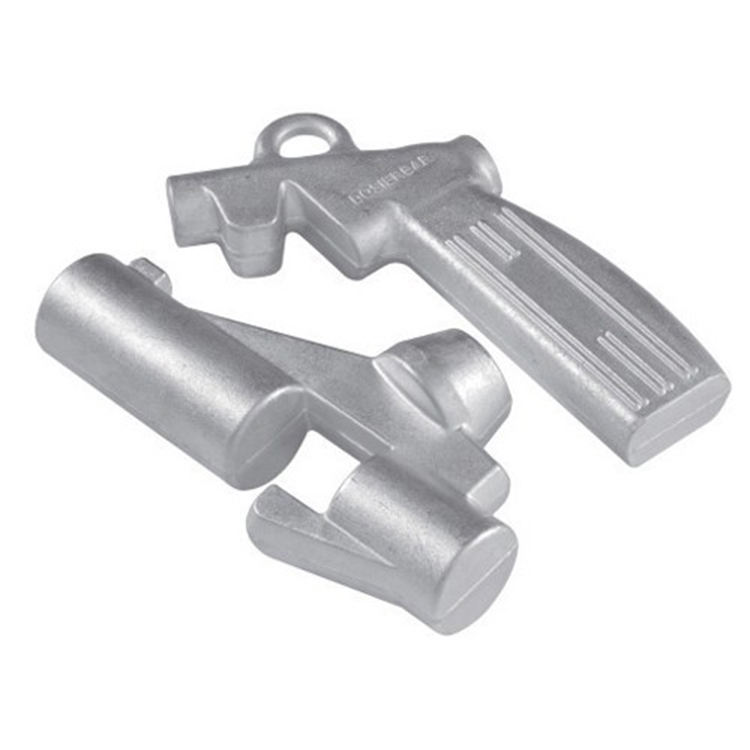
Forged Aluminum Welding Machine Parts
Ningbo Youlin Trading Co., Ltd. is a professional Forged Aluminum Welding Machine Parts manufacturer and supplier in China. Our main projects including All-In-One Solutions for Precision CNC Machining, CNC turning, CNC Milling, Metal Stamping, Deep Drawing, Forging, Casting, Investment Casting, Die Casting, Aluminum Extrusion, Plastic Injection, Tube Laser Cutting and Sheet Metal fabrication. It’s in a variety of industries for more than decade’s year. Looking forward to reaching a long-term cooperative relationship with you.
Plastic Injection Molding Service
China Factoy Customized Youlin® Plastic Injection Molding Service Suppliers.We provide Customized CNC Machining Services of any complexity for the production of Plastic Injection Molding Service. We have many experienced engineers that we can gives you a CNC machining quote within few times. Requesting a quotation for CNC machining is easy: just send me your files with drawings to my email, 3D-models or sketches in any popular format. We inspect the parts and guarantee their quality.
Ntc Temperature Thermistor Sensor Probe
Customized OEM Youlin® Ntc Temperature Thermistor Sensor Probeonents for your application, at ultra-competitive prices. Our highly qualified technical team will find a way to reduce your costs by 20% or more, with the added convenience of a one-stop-shop for all your metal part needs. We specialize in high-volume production runs, with short lead times and fixed order pricing.
- Related Blog
- Reviews