- English
- Español
- Português
- русский
- Français
- 日本語
- Deutsch
- tiếng Việt
- Italiano
- Nederlands
- ภาษาไทย
- Polski
- 한국어
- Svenska
- magyar
- Malay
- বাংলা ভাষার
- Dansk
- Suomi
- हिन्दी
- Pilipino
- Türkçe
- Gaeilge
- العربية
- Indonesia
- Norsk
- تمل
- český
- ελληνικά
- український
- Javanese
- فارسی
- தமிழ்
- తెలుగు
- नेपाली
- Burmese
- български
- ລາວ
- Latine
- Қазақша
- Euskal
- Azərbaycan
- Slovenský jazyk
- Македонски
- Lietuvos
- Eesti Keel
- Română
- Slovenski
- मराठी
- Srpski језик

Dental Equipment Brass Forged Housings
For decades, dental professionals have relied on the inherent strength, precision, and longevity of brass components to build the core of their most trusted instruments. When it comes to the critical housings and structural frames that endure constant force and sterilization, not just any material will suffice. This is where the specialized field of Dental Equipment Brass Forgings becomes paramount. The forging process aligns the brass grain structure, creating parts with superior mechanical properties—enhanced tensile strength, remarkable impact resistance, and excellent fatigue life—compared to cast or machined alternatives. Our portfolio of Brass Forged Components for Dental Instruments is engineered to meet these rigorous demands, serving as the robust foundation for handpieces, scalers, and various diagnostic tools. We specialize in manufacturing Precision Brass Dental Equipment Parts, where tight tolerances and flawless surface finishes are non-negotiable for seamless assembly and optimal function. Investing in our high-grade Precision Brass Forged Dental Tools and components directly translates to enhanced equipment reliability, reduced downtime for repairs, and ultimately, a more efficient and confident practice.
The manufacturing of Dental Equipment Brass Forged Housings is a precise science that begins with the selection of high-quality brass alloys, such as C36000 or C37700, known for their excellent machinability and corrosion resistance. The hot forging process subjects the brass to extreme pressure, refining its internal microstructure to eliminate porosity and weak points. This results in a housing that is incredibly dense and durable, capable of withstanding the high-torque stresses of modern dental handpieces and the repetitive impacts of ultrasonic scalers. Following forging, each component undergoes a series of precision CNC machining operations to achieve the exact dimensions, intricate internal channels, and mounting interfaces required for your specific equipment. Critical surfaces are finely finished to ensure perfect seals and smooth operation. Finally, components can be plated with nickel, chrome, or other finishes per specification to enhance wear resistance and provide a biocompatible, easy-to-clean surface that stands up to repeated autoclave cycles.
Key Specifications & Technical Data
- Primary Material: Free-Cutting Brass Alloys (C36000, C37700)
- Manufacturing Process: Hot Forging followed by Precision CNC Machining
- Key Properties: High Tensile Strength, Excellent Fatigue Resistance, Superior Machinability
- Corrosion Resistance: Inherently good; enhanced by optional electroplating
- Biocompatibility: Compliant with relevant medical device material standards
- Surface Finish: Customizable, from as-forged to precision-machined and plated
| Parameter | Typical Value / Range | Standard / Test Method | Application Note |
|---|---|---|---|
| Tensile Strength | 340 - 460 MPa | ASTM E8 | Ensures housing integrity under operational loads. |
| Yield Strength (0.2% Offset) | 145 - 310 MPa | ASTM E8 | Indicates resistance to permanent deformation. |
| Elongation (% in 50mm) | 25% - 40% | ASTM E8 | Provides necessary ductility for forged components. |
| Rockwell Hardness (B Scale) | HRB 65 - 85 | ASTM E18 | Balances machinability with wear resistance. |
| Density | ~8.50 g/cm³ | Industry Standard | Contributes to a solid, vibration-dampening feel. |
| Machinability Rating | 100% (C36000 Reference) | CDA Standard | Allows for efficient production of complex geometries. |
| Thermal Conductivity | 115 - 130 W/m·K | ASTM E1225 | Aids in heat dissipation from internal motors/bearings. |
Related Products




Hot Products

Brass Forging
Youlin provides a complete manufacturing solution for Brass Forging brass forging – from processing raw material through forging and fully machined components. We can not only provide a complete range of new parts from dies, samples, or production runs, but also over the last several years we have become proficient at adapting other forge's tooling to our presses. Our current capacity allows us to provide services for parts anywhere in the 200 to 20,000 volume range.
Sand Casting
Chian OEM Youlin® Sand Casting Suppliers. Youlin supplys sand casting services to manufacture a variety of metal parts and components. Our state-of-the-art foundry equipment enables the production of a wide range of metal parts, ranging from very simple parts to complex structures utilizing several metals. We possess the capability to supply precisely shaped castings formed within specific tolerances. We apply a number of different surface finishes that meet our clients' requirements.
Machined Aluminum Parts
China Factoy Customized Youlin® machined aluminum parts Suppliers.We provide Customized CNC Machining Services of any complexity for the production of machined aluminum parts. We have many experienced engineers that we can gives you a CNC machining quote within few times. Requesting a quotation for CNC machining is easy: just send me your files with drawings to my email, 3D-models or sketches in any popular format. We inspect the parts and guarantee their quality.
Forged Brass Multiple Valve Components
Youlin is a premier provider of Forged Brass Multiple Valve Components. One of our core service offerings is Youlin® Forged Brass Multiple Valve Components . Our specialty focus on progressive metal stampings utilizes a combination of high-speed presses and progressive dies in combination with 4 slide & multi-slide presses to provide the most cost effective solution for high volume manufacturing. We design & build specialized manufacturing cells utilizing automation when appropriate.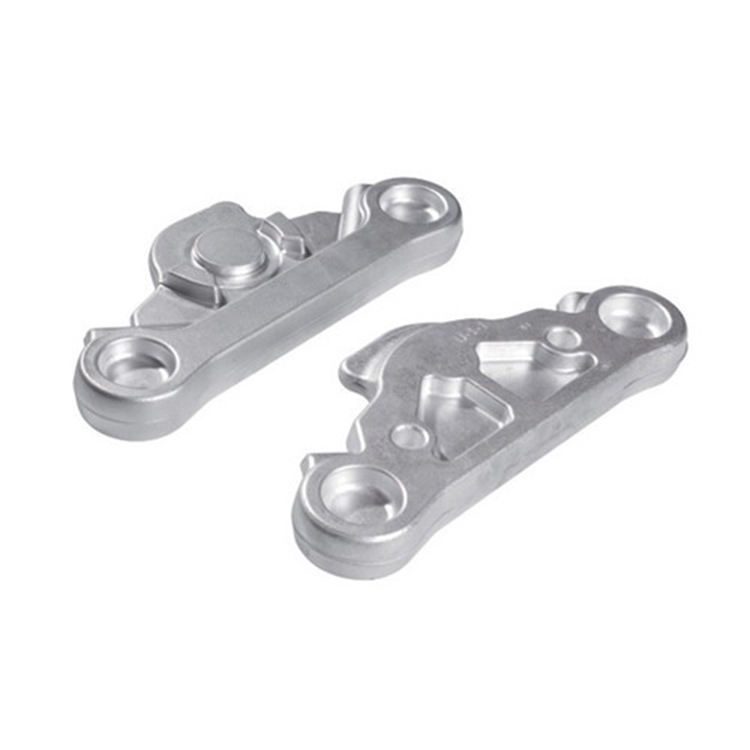
Aluminum Alloy Forged Triple Clamp
Ningbo Youlin Trading Co., Ltd. is a professional Aluminum Alloy Forged Triple Clamp manufacturer and supplier in China. All our industries served are agricultural machinery, automotive industry, construction machinery, lifting industry, oilfield industry, etc. Besides forging, we could also supply other value added services for finished products. We have produced Aluminum Alloy Forged Triple Clamp for many years, looking forward to reaching a long-term cooperative relationship with you.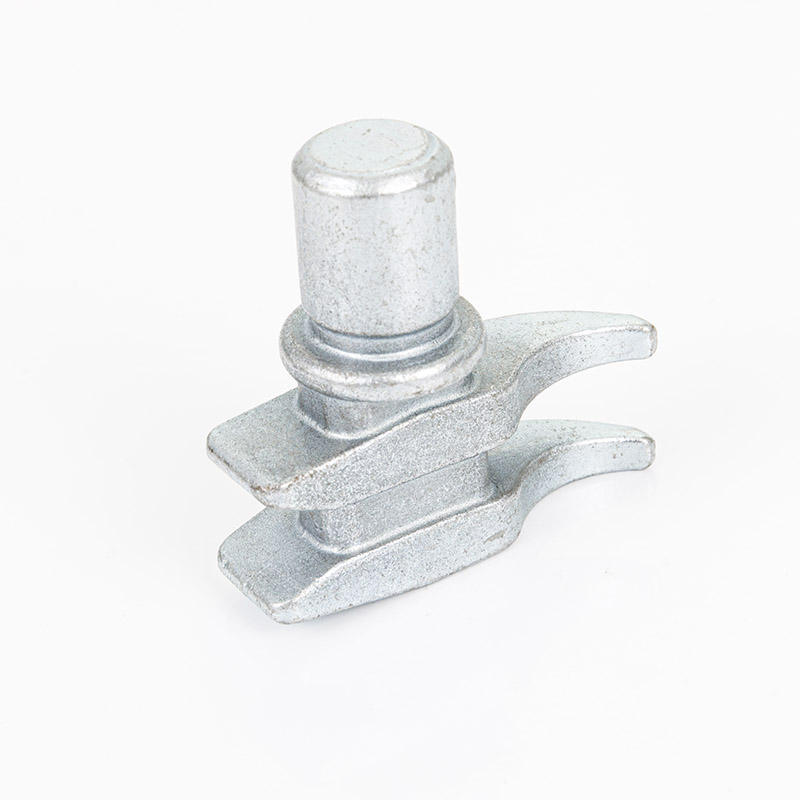
Aluminum Die Casting 01
Ningbo Youlin Trading Co., Ltd. is a professional Aluminum Die Casting 01 manufacturer and supplier in China. Youlin® Injection molding plastic parts are widely used today for both consumer products and engineering applications. Almost every plastic item around you was manufactured using injection molding. This is because the technology can produce identical parts at very high volumes at a very low cost per part.
- Related Blog
- Reviews