- English
- Español
- Português
- русский
- Français
- 日本語
- Deutsch
- tiếng Việt
- Italiano
- Nederlands
- ภาษาไทย
- Polski
- 한국어
- Svenska
- magyar
- Malay
- বাংলা ভাষার
- Dansk
- Suomi
- हिन्दी
- Pilipino
- Türkçe
- Gaeilge
- العربية
- Indonesia
- Norsk
- تمل
- český
- ελληνικά
- український
- Javanese
- فارسی
- தமிழ்
- తెలుగు
- नेपाली
- Burmese
- български
- ລາວ
- Latine
- Қазақша
- Euskal
- Azərbaycan
- Slovenský jazyk
- Македонски
- Lietuvos
- Eesti Keel
- Română
- Slovenski
- मराठी
- Srpski језик

Warm Forging
Precision metal forming demands processes that balance material integrity with complex geometries. Warm forging, performed at temperatures typically between 650°C and 950°C (1200°F to 1750°F), offers a compelling middle ground. It bridges the gap between cold forging and traditional Hot Forging, providing superior dimensional accuracy and surface finish compared to its hotter counterpart while requiring significantly less forming force than cold forging. This makes it an ideal choice for producing high-strength, near-net-shape components for demanding industries like automotive and aerospace. Our advanced manufacturing capabilities are complemented by state-of-the-art equipment, including our proprietary hot forging hydraulic press systems, which deliver the precise, controlled force necessary for consistent warm forging results. We specialize in a wide range of materials, from alloy steels to specialized hot forging aluminum alloys, ensuring optimal grain flow and mechanical properties for every application. The resulting Hot Forged Parts exhibit excellent strength-to-weight ratios, enhanced fatigue resistance, and are ready for minimal secondary machining, reducing overall production waste and cost. The <产品名字> process is defined by rigorous technical parameters that ensure repeatable quality and performance. Our engineering team meticulously controls every variable, from billet heating in precisely calibrated furnaces to the final forming stage. Below are the key specifications and material capabilities that define our warm forging service. Our integrated quality assurance protocol includes in-process monitoring of temperature and force, followed by coordinate measuring machine (CMM) inspection and non-destructive testing (NDT) to validate internal integrity. This data-driven approach guarantees that every component meets the specified mechanical properties and geometric requirements.
Key Process Parameters
Material Specifications & Applications
Material Grade
Key Characteristics
Typical Applications
AISI 4140 / 4340
High hardenability, excellent strength and toughness
Gears, shafts, connecting rods
Aluminum 6061 / 7075
High strength-to-weight ratio, good corrosion resistance
Aerospace fittings, automotive control arms
Stainless Steel 304 / 316
Superior corrosion and heat resistance
Valve bodies, marine components, fasteners
Microalloyed Steels
Eliminates need for quenching & tempering
Automotive crankshafts, structural parts
Related Products



Hot Products

Hot Forging
Youlin® Hot forging is known to produce some of the strongest manufactured parts and components compared to other metal manufacturing processes. We produce hot forging parts and components from a few grams to more than a few hundred kilograms. For hot forging parts with special surface finish requirements, we provide a broad range of secondary operation including machining, surface finishing, etc.
Progressive Die Stamping
Youlin is a premier provider of metal stamping, laser cutting, and metal fabrication solutions. One of our core service offerings is Youlin® progressive die stamping. Our specialty focus on progressive metal stampings utilizes a combination of high-speed presses and progressive dies in combination with 4 slide & multi-slide presses to provide the most cost effective solution for high volume manufacturing. We design & build specialized manufacturing cells utilizing automation when appropriate.
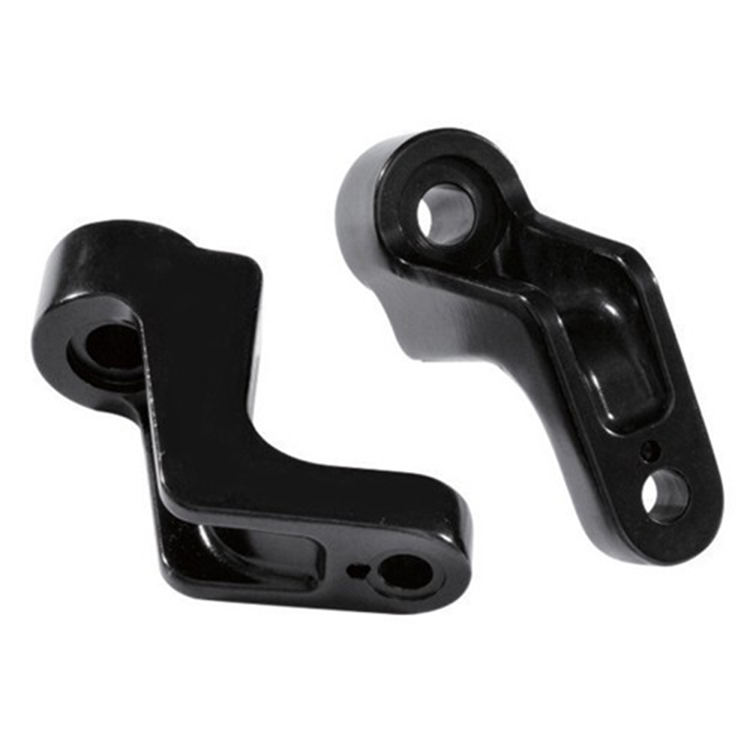
Automobile and Motorcycle Support Block
China Factoy Customized Youlin® automobile and motorcycle support block Suppliers.We provide Customized CNC Machining Services of any complexity for the production of automobile and motorcycle support block. We have many experienced engineers that we can gives you a CNC machining quote within few times. Requesting a quotation for CNC machining is easy: just send me your files with drawings to my email, 3D-models or sketches in any popular format. We inspect the parts and guarantee their quality.
CNC Casting Parts
Ningbo Youlin Trading Co., Ltd. is a professional CNC Casting Parts manufacturer and supplier in China. Ningbo Youlin Trading Co., Ltd. offers a wide range of products such as bedding sets, cushions, curtains, tablecloths, and other household textiles. All our industries served are agricultural machinery, automotive industry, construction machinery, lifting industry, oilfield industry, etc. Besides forging, we could also supply other value added services for finished products.
Fabrication Plastic Precision Processing
Ningbo Youlin Trading Co., Ltd. is a large-scale Fabrication Plastic Precision Processing manufacturer and supplier in China. We have been specialized in Customized CNC Machining Services of any complexity for the production of Fabrication Plastic Precision Processing for many years. Our products have a good price advantage and cover most of the European and American markets. We look forward to becoming your long-term partner in China.
Die Stamping Deep Drawn Copper Parts Of Sensor Probe
Ningbo Youlin Trading Co., Ltd. is a professional Die Stamping Deep Drawn Copper Parts Of Sensor Probe manufacturer and supplier in China. All our industries served are agricultural machinery, automotive industry, construction machinery, lifting industry, oilfield industry, etc. Besides forging, we could also supply other value added services for finished products. We have produced Die Stamping Deep Drawn Copper Parts Of Sensor Probe for many years, looking forward to reaching a long-term cooperative relationship with you.
- Related Blog
- Reviews