- English
- Español
- Português
- русский
- Français
- 日本語
- Deutsch
- tiếng Việt
- Italiano
- Nederlands
- ภาษาไทย
- Polski
- 한국어
- Svenska
- magyar
- Malay
- বাংলা ভাষার
- Dansk
- Suomi
- हिन्दी
- Pilipino
- Türkçe
- Gaeilge
- العربية
- Indonesia
- Norsk
- تمل
- český
- ελληνικά
- український
- Javanese
- فارسی
- தமிழ்
- తెలుగు
- नेपाली
- Burmese
- български
- ລາວ
- Latine
- Қазақша
- Euskal
- Azərbaycan
- Slovenský jazyk
- Македонски
- Lietuvos
- Eesti Keel
- Română
- Slovenski
- मराठी
- Srpski језик

Casting Pneumatic Valve Body: How Casting Technology Shapes Reliable Pneumatic Control Components
In a pneumatic system, people often pay attention to cylinders, actuators, and control valves, but the valve body itself is the component that quietly supports the entire airflow control process.
A pneumatic valve body may not be a complex-looking part from the outside, but its internal passages, sealing surfaces, material quality, and dimensional accuracy directly influence the performance of the complete valve assembly.
As a manufacturer involved in precision metal components, we understand that a valve body is not simply a metal housing. It is a pressure-bearing part that needs to balance strength, machining accuracy, airflow design, and production consistency. Casting technology provides an efficient way to create valve bodies with complex internal structures while meeting industrial requirements.
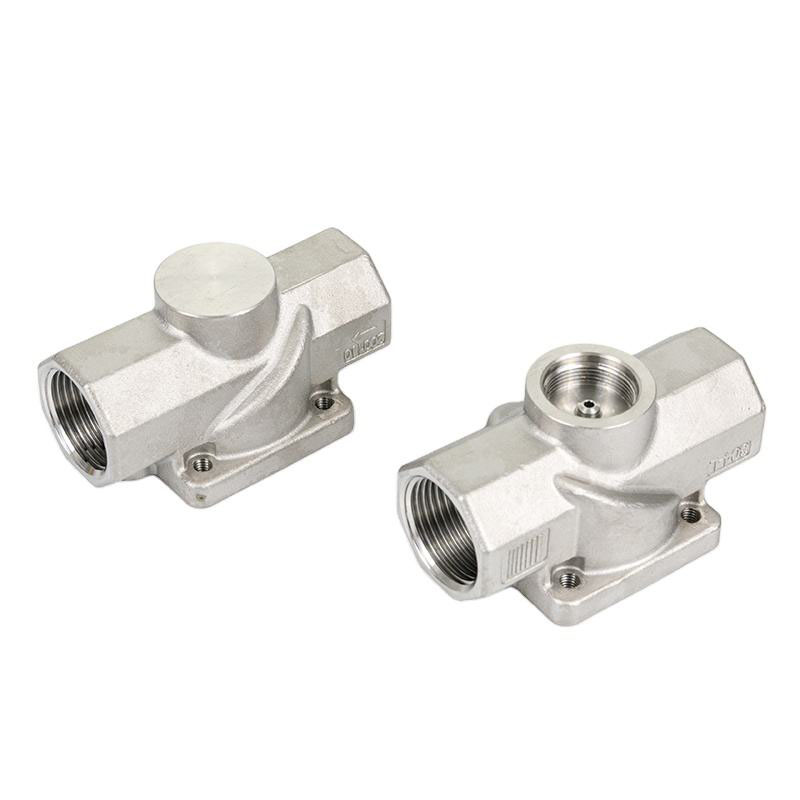
What Is a Casting Pneumatic Valve Body?
A Casting Pneumatic Valve Body is the main housing component of a pneumatic valve manufactured through casting processes.
Its primary functions include:
Unlike simple metal blocks that are machined into shape, cast valve bodies are formed by pouring molten metal into a specially designed mold. This allows manufacturers to create complex shapes and internal channels that may be difficult or costly to produce through traditional machining methods.
After casting, additional processes such as machining, surface treatment, and inspection are usually performed to achieve the required dimensions and performance.
Why Is Casting Used for Pneumatic Valve Bodies?
The valve body is usually designed with multiple air passages, mounting holes, and sealing areas. Manufacturing these structures requires both efficiency and precision.
Casting offers several practical advantages.
Suitable for Complex Internal Structures
A pneumatic valve body often contains internal airflow channels that determine how compressed air moves through the system.
With casting, manufacturers can create near-net-shape components that already include the basic structure before machining.
This helps reduce material waste and improves production efficiency, especially for components with complicated geometries.
Better Production Efficiency for Batch Manufacturing
For industrial pneumatic equipment, valve bodies are often produced in large quantities.
Compared with manufacturing every part from solid metal through machining, casting can reduce processing time and improve consistency between batches.
This makes casting suitable for applications requiring stable supply and repeatable quality.
Flexible Material Options
Different pneumatic applications require different material characteristics.
Common materials used for cast valve bodies may include:
The material choice depends on factors such as operating environment, pressure requirements, corrosion conditions, and weight considerations.
Key Factors Affecting the Quality of a Cast Pneumatic Valve Body
Although casting provides manufacturing advantages, the final performance depends on many details.
Casting Material Quality
The material directly affects:
For example, lightweight aluminum alloy valve bodies are often selected when weight reduction is important, while stainless steel options may be preferred for environments requiring stronger corrosion resistance.
Internal Casting Quality
A valve body needs a relatively dense internal structure.
Potential casting defects such as:
may affect sealing performance and reliability if not properly controlled.
Therefore, controlling the casting process is an important part of valve body manufacturing.
Machining Accuracy
Casting creates the basic shape, but many critical areas still require machining.
Important machining areas usually include:
Even small dimensional differences can influence assembly accuracy and valve performance.
Surface Treatment
Depending on the application, cast pneumatic valve bodies may require surface treatments to improve appearance, corrosion resistance, or durability.
Common processes include:
Common Applications of Casting Pneumatic Valve Bodies
Casting pneumatic valve bodies are widely used in different industries where compressed air control is required.
Industrial Automation Equipment
Automation systems rely heavily on pneumatic components for movement and control.
Valve bodies are commonly found in:
Manufacturing Equipment
Many manufacturing machines use pneumatic systems because they provide fast response and reliable operation.
Cast valve bodies are used inside various pneumatic control units to manage airflow.
Automotive Production Lines
Automotive factories use pneumatic systems for:
Stable valve performance is important for maintaining production efficiency.
Packaging and Food Processing Equipment
Pneumatic valves are also common in packaging machinery because compressed air systems can provide clean and flexible movement control.
The valve body material and surface requirements may vary depending on the working environment.
How Is a Casting Pneumatic Valve Body Manufactured?
Although processes vary depending on design and material, production usually includes several stages.
Mold Preparation
The first step is creating a mold based on the valve body design.
The mold determines the basic shape and internal structure of the casting.
Metal Casting
Molten metal is poured into the mold and allowed to solidify.
During this stage, temperature control and process management influence the final casting quality.
Cleaning and Inspection
After removing the casting from the mold, excess material is removed and the surface is cleaned.
Manufacturers then inspect the casting for appearance and structural quality.
CNC Machining
Precision areas are machined according to drawing requirements.
This step ensures accurate assembly with other pneumatic components.
Final Testing
Depending on application requirements, inspection may include:
Casting Pneumatic Valve Body vs Machined Valve Body
| Feature | Casting Pneumatic Valve Body | Fully Machined Valve Body |
|---|---|---|
| Production efficiency | Suitable for medium and large batches | More time-consuming |
| Complex shapes | Good for complex structures | Limited by machining methods |
| Material utilization | Higher efficiency | More material waste |
| Cost control | Better for quantity production | Higher for large volumes |
| Customization | Requires mold development | More flexible for prototypes |
Both methods have their own advantages. The suitable manufacturing method depends on design complexity, quantity, material, and performance requirements.
Future Development of Pneumatic Valve Body Manufacturing
With the growth of industrial automation, pneumatic components are moving toward smaller size, higher efficiency, and better reliability.
Future valve body manufacturing may focus on:
As industrial equipment becomes more precise, the requirements for valve body quality will continue to increase.