- English
- Español
- Português
- русский
- Français
- 日本語
- Deutsch
- tiếng Việt
- Italiano
- Nederlands
- ภาษาไทย
- Polski
- 한국어
- Svenska
- magyar
- Malay
- বাংলা ভাষার
- Dansk
- Suomi
- हिन्दी
- Pilipino
- Türkçe
- Gaeilge
- العربية
- Indonesia
- Norsk
- تمل
- český
- ελληνικά
- український
- Javanese
- فارسی
- தமிழ்
- తెలుగు
- नेपाली
- Burmese
- български
- ລາວ
- Latine
- Қазақша
- Euskal
- Azərbaycan
- Slovenský jazyk
- Македонски
- Lietuvos
- Eesti Keel
- Română
- Slovenski
- मराठी
- Srpski језик

Products


Forging Aluminum Bracket
Youlin uses proven Youlin® aluminum forging processes to produce parts that match our customers' exact requirements. Our design engineers will work with you, as needed, to optimize your designs for faster and more efficient production, without sacrificing part performance. We offer full technical support, secondary machining, variety of surface finishing processes, warehousing, assembly services, and more. Youlin is a true one-stop-shop for forged aluminum parts.
Send Inquiry
Product Description
Our organization has been focusing on brand strategy. Customers' gratification is our greatest advertising. We also source OEM provider for Forging Aluminum Bracket, In a word, when you choose us, you choose a best life. Welcome to go to our manufacturing facility and welcome your get! For further more inquiries, you should do not hesitate to get hold of us.
Forging, Forged, OEM Forging Parts, Welcome to visit our company, factory and our showroom where displays various hair merchandise that will meet your expectation. Meanwhile, it is convenient to visit our website, and our sales staff will try their best to deliver you the best service. Make sure you contact us if you require more information. Our aim is to help customers realize their goals. We're making great efforts to achieve this win-win situation.
The client fulfillment is our primary concentrate on. We uphold a consistent level of professionalism, excellent, credibility and service for ODM Supplier China Youlin® Forging Aluminum Bracket, We sincerely welcome all guests to setup business enterprise interactions with us around the basis of mutual positive aspects. Remember to speak to us now. You'll get our qualified reply within just 8 several hours.
ODM Supplier China Youlin® Forging Aluminum Bracket, They are sturdy modeling and promoting effectively all over the world. Never ever disappearing major functions within a quick time, it's a have to to suit your needs of fantastic good quality. Guided by the principle of Prudence, Efficiency, Union and Innovation. the corporation. ake an excellent efforts to expand its international trade, raise its organization. rofit and raise its export scale. We're confident that we're going to have a bright prospect and to be distributed all over the world in the years to come.
1. Our Capacity for Forging Aluminum Bracket
Our capabilities include prototypes or one-offs, small runs, full production quantities and just-in-time inventory supply for long term contracts. Some of the products we forge and processes we use for Forging Aluminum Brackets include
√ Flat bar blocks up to 60″ width and 10,000 lbs.
√ Cylinders and sleeves up to 72″ maximum O.D. and 96″ maximum length
√ Discs and hubs up to 80″ diameter and 15,000 lbs.
√ Rolled, hand forged or mandrel forged rings up to 80″ maximum O.D. and 65″ maximum length
√ Rounds, shafts and step shafts up to 220″ maximum length and 10,000 lbs.
√ Forged-in steps or contours to reduce finish machining time and material waste
√ Quenching and tempering, normalizing, or annealing of forgings.
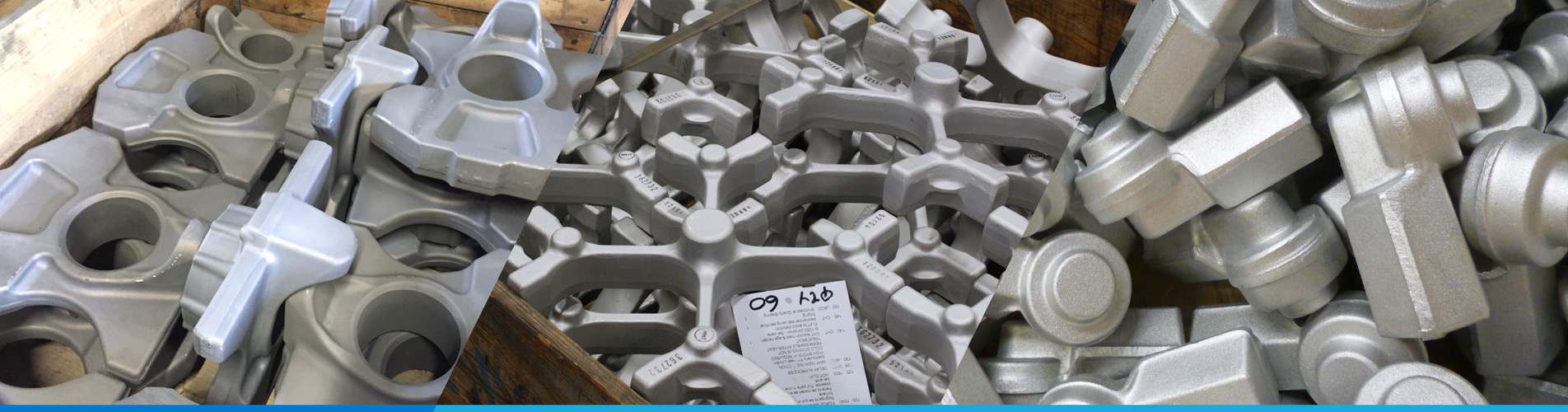
2. Forging Aluminum Bracket Process
Aluminum can be forged in several different ways, including open-die forging, closed-die forging, and rolled-ring forging. Different forging techniques are used to create different aluminum parts and items.
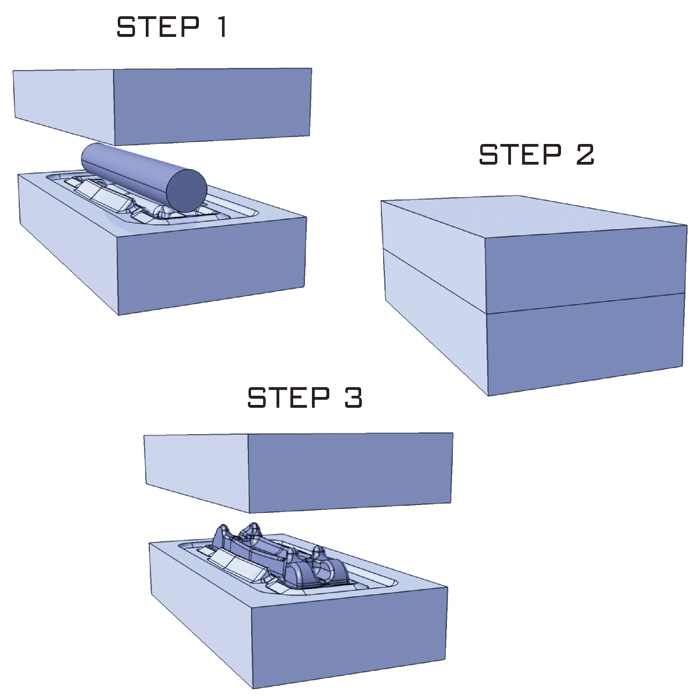 ● Open-Die Forging involves pounding or hammering huge aluminum blocks weighing up to 200,000 pounds in order to form large metal components. The end result of open-die forging is improved alloy strength and optimal structural integrity.
● Closed-Die Forging sometimes called impression-die forging. It accounts for the majority of modern Youlin® Forging Aluminum Bracket production and may be used to produce complex aluminum parts. Closed-die forging ultimately increases the strength and tightness of aluminum alloy products. In addition, it allows for the formation of a nearly limitless variety of shapes and designs. When it comes to mass production runs, closed-die forging typically remains more cost-effective than open-die forging. In addition, closed-die forging results in a better surface finish and is more environmentally-friendly.
● Rolled-Ring Forging Aluminum Bracket is a process of creating metal rings, which starts with open-die forging to create a donut-shaped ring preform. Afterward, the ring-rolling process uses an “idler roller” to gradually apply pressure to the preform in order to modify the thickness and height of the walls of the ring. During this process, ring diameters increase until they reach specified dimensions.
3. Benefits of Forging Aluminum Bracket Parts
→Strength to weight ratio →Good surface finish →Light weight / low density →Fracture toughness →Corrosion resistance →Fatigue and fatigue crack growth →High thermal conductivity →Cryogenic properties →Design flexibility
4. Applications for Forging Aluminum Bracket Parts
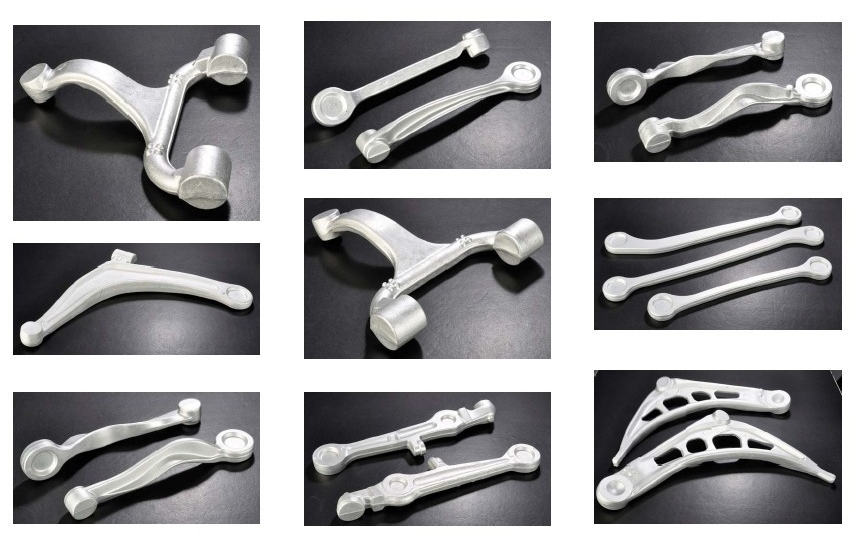
Because of its strength, Forging Aluminum Brackets remain ideal for applications where performance and safety are a high priority as it can endure intense conditions for a wide variety of industries, including aircraft, aerospace, automotive, architectural, appliance, military and defense, marine, petrochemical and process equipment industries.
◆ High strength-to-weight ratio, such as air frames, automotive frames and panels, wheels
◆ Corrosion resistance, such as fasteners, structural components and frames for construction and decorative architectural elements, process equipment and marine equipment
◆ Wear resistance and durability, such as process equipment, fasteners and certain motor components.
5. FAQ
Q: What is the difference between forged aluminum and cast aluminum?
A: The basic difference between forging and casting is that the forging process does not melt the work piece material to create a new shape. In casting, metal is melted and poured or forced into a mold made in the shape of the desired item.
Q: Does forging aluminum make it stronger?
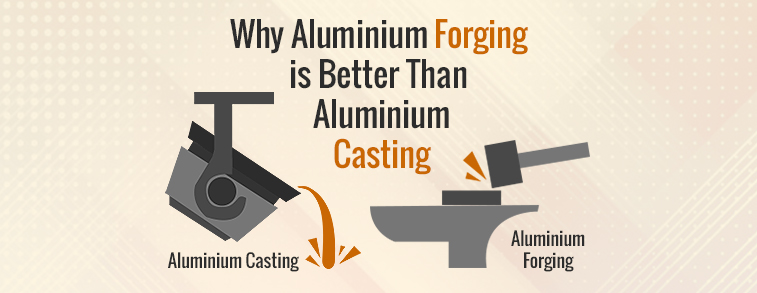 A: When treated with heat, Forging Aluminum Brackets show certain mechanical properties that make their strength to weight ratio far superior than that of castings. This greater strength goes on to show that Forging Aluminum Bracket can attain good strength unlike other methods.
Q: How hard is forged aluminum?
A: In summary, forged aluminum is strong, which is the ideal choice when aluminum components must exhibit maximum strength and performance in service, where weight is minimized.
Hot Tags: Forging, Forged, OEM Forging Parts
Send Inquiry
Please Feel free to give your inquiry in the form below. We will reply you in 24 hours.