- English
- Español
- Português
- русский
- Français
- 日本語
- Deutsch
- tiếng Việt
- Italiano
- Nederlands
- ภาษาไทย
- Polski
- 한국어
- Svenska
- magyar
- Malay
- বাংলা ভাষার
- Dansk
- Suomi
- हिन्दी
- Pilipino
- Türkçe
- Gaeilge
- العربية
- Indonesia
- Norsk
- تمل
- český
- ελληνικά
- український
- Javanese
- فارسی
- தமிழ்
- తెలుగు
- नेपाली
- Burmese
- български
- ລາວ
- Latine
- Қазақша
- Euskal
- Azərbaycan
- Slovenský jazyk
- Македонски
- Lietuvos
- Eesti Keel
- Română
- Slovenski
- मराठी
- Srpski језик

The Rise of stainless steel precision Casting ushered in a "Material Revolution" in the field of industrial parts
——Comparable performance, cost advantage, accelerate stainless steel instead of copper
In the tide of global towards digital and green energy transformation, the demand for the critical metal copper is rising at an unprecedented speed. Demand for huge computing power driven by data centers and artificial intelligence, as well as the rapid expansion of new energy industries such as photovoltaic, wind power and new energy vehicles, have combined to push up copper consumption expectations. Subsequently, copper prices continue to fluctuate high, to the downstream manufacturing industry brought heavy cost pressure. In this context, a silent and profound material substitution change is accelerating in the industrial manufacturing field, especially in the precision parts industry such as bathroom accessories, architectural hardware, door and window hinges. Stainless steel is becoming a strong competitor to replace copper by virtue of its increasingly sophisticated precision casting technology and comprehensive advantages.
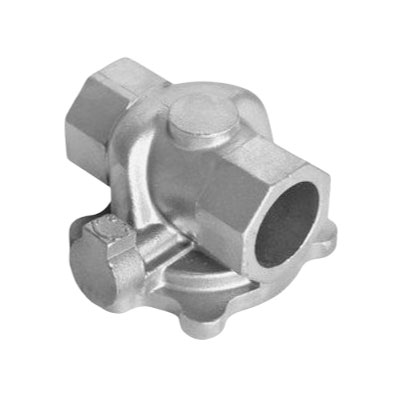
Soaring demand and Cost: High copper prices force industry to find new paths
Copper, because of its excellent electrical conductivity, thermal conductivity, corrosion resistance and ductility, has long occupied an irreplaceable position in power, electronics, construction, industrial equipment and daily hardware. However, with the transformation of the global energy structure and the large-scale construction of digital economy infrastructure, the demand curve for copper has sharply increased. The International Energy Agency (IEA) and others have repeatedly reported that the copper density required for the application of clean energy technologies is much higher than that of traditional fossil energy systems. At the same time, copper prices continue to be supported by expectations of a tight balance between supply and demand, as copper mining investment cycles are long and new supply is limited.
High and volatile raw material costs directly squeeze the profit margins of downstream component manufacturers. In industries such as bathroom fixtures, building hardware, and high-end door and window hinges, products have high requirements for the corrosion resistance, strength, and aesthetic appeal of materials. Originally, copper alloys such as brass and bronze were widely used. Facing the cost pressure, manufacturers have to actively seek both can satisfy the performance requirements, and can effectively control the cost of replacement materials. Stainless steel, especially stainless steel parts formed by precision casting technology, has entered the center of the industrial vision with its superior performance and significant cost advantages.
Mature technology and comparable performance: Stainless steel precision casting breaks down barriers
In the past, the casting process of copper alloy, especially its good fluidity and plasticity, was considered as an advantage in some parts fields with complex structures and high surface quality requirements.However, stainless steel precision casting technology has made great progress in recent years, especially the development of investment casting (lost wax casting) and silica sol process refinement and automation, which makes it possible to produce stainless steel investment castings with extremely complex shapes, precise dimensions and high surface finish.
From the comparison of material properties, stainless steel is not inferior to or even better than copper alloy in many key indicators:
Corrosion resistance: Austenitic stainless steel (such as 304, 316 series) contains chromium, nickel and other elements, can form a dense passivating film, in a variety of environments, especially humid, chlorine-containing environment (such as bathroom), its corrosion resistance performance is extremely excellent, far more than many copper alloys, to avoid the generation of copper green, long-term beauty is better.
Mechanical strength and hardness: The strength and hardness of stainless steel are generally higher than that of ordinary brass, which makes stainless steel parts more resistant to wear and deformation, providing longer service life and higher reliability in applications that need to bear large mechanical loads, such as door and window hinges and high-strength fasteners.
Environmental protection and hygiene: Stainless steel is a lead-free material with a dense and smooth surface that is less prone to bacterial growth. In areas involving drinking water (such as valves and faucet cores) and food contact, it has more advantages in terms of safety and hygiene, meeting increasingly strict environmental protection and health standards.
Aesthetic diversity: Stainless steel can be treated with various surface processes such as polishing, sandblasting, electroplating, and PVD (Physical Vapor Deposition) coloring to achieve a wide range of textures from mirror-like to matte, as well as rich colors like champagne gold, rose gold, and gun black, meeting the diverse demands of modern industrial design and architectural aesthetics.
Cost advantage and stable supply: the economics of stainless steel substitution
In addition to matching and surpassing performance, cost is the core factor driving substitution.
1.Raw material cost: Although the price of stainless steel is also affected by the market for alloying elements such as nickel and chromium, its overall price level is more stable and has a lower cost in the long term compared to electrolytic copper and copper alloys. Under the same volume or weight, adopt stainless steel material can directly save considerable cost of raw material purchasing.
2.Processing and post-treatment costs: stainless steel castings often require simpler or less surface protection treatment (such as coating) due to their good corrosion resistance. Its relatively high strength sometimes allows for the use of thinner wall thickness to meet the same performance requirements, further reducing weight and saving materials. In addition, stainless steel waste has a high recycling value and good circular economy.
3.Life cycle cost: Considering the longer corrosion resistance life and lower maintenance and replacement frequency of stainless steel parts, the total cost advantage in the whole life cycle of the product is more obvious.
Application Expansion and Industrial Response: The Wave of Substitution has arrived
At present, this material substitution trend has shown results in several areas:
Bathroom industry: the main body of high-end faucets, spool housing, shower fittings, etc., has been a large number of 304, 316 stainless steel precision castings instead of copper casting parts, which not only ensures the corrosion resistance and health requirements, but also reduces the cost, and improves the competitiveness of products.
Architectural hardware and door and window industry: high-performance door and window hinges, locks, brackets, handrail connectors, etc. began to use high-strength stainless steel casting to cope with complex outdoor weather conditions, ensure long-term use of stability and safety, while reducing the overall weight.
Industrial equipment and general parts: pump valve housing, pipe joints, instrument brackets and other parts with requirements for accuracy and corrosion resistance, the proportion of stainless steel precision castings is also steadily increasing.
Many leading manufacturing enterprises have actively made plans, renovated or added new stainless steel precision casting production lines, strengthened cooperation with material suppliers and technology research and development institutions, and are committed to optimizing the stainless steel casting process, overcoming technical difficulties under a few specific working conditions (such as further improving the casting fluidity of certain special stainless steels), and developing more suitable special stainless steel grades for casting.
Looking to the future: Green and intelligent manufacturing drive each other
Industry analysis, with the promotion of the "dual carbon" goal, the pursuit of energy saving and emission reduction materials will be more intense. The high recyclability of stainless steel itself (the recovery rate can reach more than 90%) fits the concept of circular economy. Meanwhile, the integration of intelligent manufacturing technology will take the efficiency, accuracy and consistency of stainless steel precision casting to a new level, and the cost is expected to be further optimized.
This wave of material substitution from copper to stainless steel, triggered by market cost pressure and supported by technological progress, is not only a response to short-term price fluctuations but also a strategic adjustment in the industrial manufacturing sector based on a comprehensive consideration of long-term performance, cost and environmental protection. It indicates that in the broader field of precision components not limited to the above-mentioned industries, stainless steel, with its comprehensive advantages, is gradually transforming from an "alternative option" to a "preferred choice", reshaping the application landscape of industrial materials.